Get a 3D scan
Get an instant price and order your scan today.



In today’s rapidly advancing technological landscape, 3D scanning has become a transformative tool across a wide range of industries.
Not too long ago, 3D scanning was reserved for highly specialised applications and often required extensive data processing. Now, it offers significant benefits such as speed and precision, though, like most advanced technologies, it also comes with certain costs and considerations.
This article explores some of the key advantages and drawbacks of using 3D scanning, providing insights to help you determine how it could best serve your projects or business needs.

One of the key advantages of 3D scanning is its exceptional speed in capturing data.
Gone are the days of lengthy manual measurements and extended downtime when recording complex geometries. Modern 3D scanners can rapidly digitise objects, significantly reducing project timelines.
This level of efficiency is particularly valuable in sectors such as automotive, aerospace, and manufacturing, where time is a critical factor.
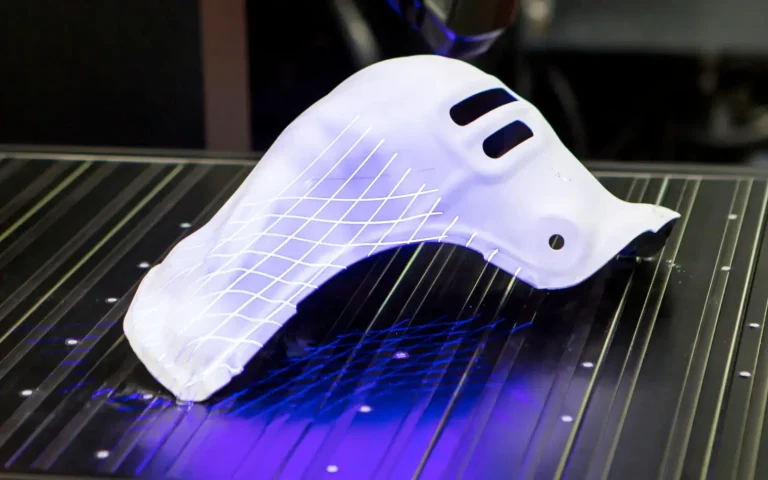
Another major benefit of 3D scanning is its non-contact approach. This is especially useful when working with delicate, soft, or intricately shaped surfaces.
Because there is no physical contact, the risk of damaging or deforming the object is eliminated, while still achieving precise dimensional data.
This capability is vital in applications such as quality control, heritage conservation, and the analysis of deformable packaging.

The precision of 3D scanning technology allows for the detection of surface deviations smaller than a skin cell, ensuring that even the finest details are accurately captured.
This level of accuracy is essential in fields such as medicine, where every micron can make a difference, and in engineering, where meeting exact specifications is critical.
3D scanning excels in delivering complete and detailed data. Unlike traditional measurement methods, modern scanners capture a full 3D model of an object, ensuring that no element or surface is overlooked.
This level of thoroughness is invaluable in areas such as reverse engineering and prototyping, where understanding every aspect of a design is critical to achieving accurate and reliable results.
While 3D scanning offers numerous advantages, these benefits often come with a notable cost. Organisations must carefully assess the financial implications, particularly when considering the purchase of scanning equipment.
High-quality 3D scanners represent a significant investment, which may not be practical for those who require scanning only on an occasional basis. In such cases, outsourcing 3D scanning services can be a more cost-effective and flexible alternative, providing access to advanced technology without the need for ownership.
A key limitation of 3D scanning is its reliance on line of sight. Scanners can only capture surfaces that are directly visible to their sensors, making it difficult to record undercuts, internal cavities, or concealed areas.
Overcoming this challenge often requires multiple scans from different angles or the use of creative scanning techniques to ensure complete and accurate data capture.

Another hurdle in 3D scanning is dealing with clear materials like glass or transparent plastics. These materials cannot be captured accurately without the use of a special spray that makes them opaque. While this is a manageable workaround, it adds an extra step to the scanning process.
3D scanning provides a wide range of advantages, including speed, non-contact measurement, exceptional accuracy, and comprehensive data capture, making it a valuable asset across numerous industries.
However, the associated costs of equipment ownership, along with challenges such as line of sight limitations and difficulties scanning transparent materials, present certain considerations that must be weighed carefully.
Ultimately, understanding both the benefits and limitations of 3D scanning is key to making informed decisions about how best to apply this technology to your specific projects or operational needs.