Get a 3D scan
Get an instant price and order your scan today.


The car industry is currently going through major changes, driven by a strong focus on sustainability and protecting the environment. One important trend in this shift is converting traditional petrol and diesel vehicles into electric ones. However, this process involves much more than just swapping out the engine. It demands careful engineering, attention to detail, and creative thinking. Leading this transformation is 3D scanning technology, which has brought a new level of accuracy and efficiency to the process of turning Internal Combustion Engine (ICE) vehicles into Electric Vehicles (EVs).
Modern vehicles are made up of many parts that need to work smoothly together. When converting a car to electric, new EV components must be carefully fitted into the existing structure, and every vehicle brings its own unique challenges. The first step is to create a clean, well-prepared base where the electric parts can be securely installed.
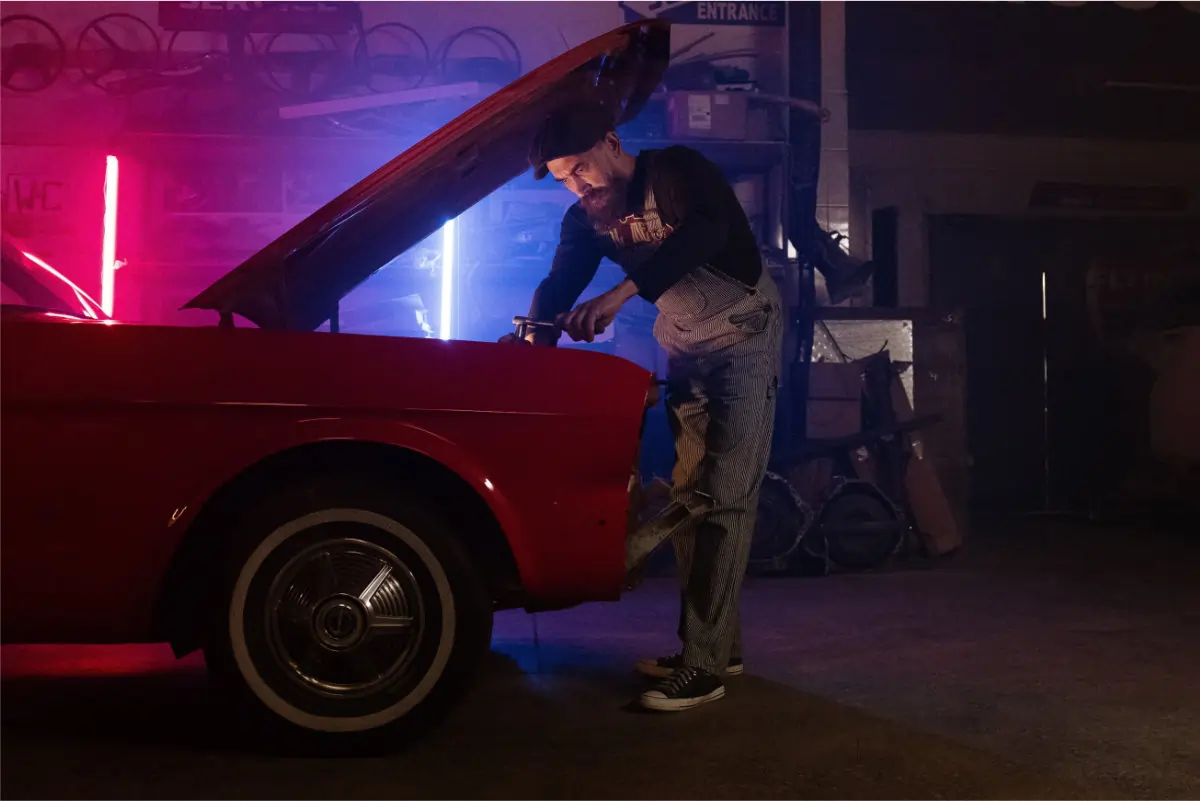
The process of converting a vehicle from an Internal Combustion Engine (ICE) to an Electric Vehicle (EV) begins with carefully removing all ICE components. This includes taking out the engine, gearbox, exhaust, fuel pump, radiator, and cooling systems. The fuel tank is also removed to make room for the new EV elements, such as the batteries and electric motors.
Once the vehicle has been stripped back to its basic shell, it’s the perfect time to scan and digitise it.
In the automotive industry, accuracy is everything. Even the smallest measurement error can cause problems with efficiency, performance, or safety.
So how does 3D scanning improve the conversion process? By collecting millions of data points from the surface of the vehicle, 3D scanning creates a highly detailed digital model that shows its exact shape and size. This allows engineers to study and replicate every detail of the car with exceptional precision. Traditional measuring methods were often slow and prone to human error, whereas 3D scanning captures dimensions accurate to the millimetre.
This technology also allows engineers to work in a virtual environment before any physical changes are made. They can test different designs and setups digitally, helping to speed up planning and reduce the risk of costly mistakes later on.
Once the 3D scan is complete, engineers can begin designing the layout of the new components in a digital workspace. This allows them to make precise adjustments and ensure that everything fits safely and correctly without any clashes or interference.
Precise Spatial Planning
Using 3D scan data of the vehicle’s structure alongside computer-aided design (CAD) models of new EV components, engineers can plan exactly where parts such as motors, batteries, and cooling systems should go. Working digitally helps identify potential fit or spacing issues early on, avoiding expensive rework during the physical build.
Optimal Weight Distribution
Because batteries add significant weight, achieving good balance is key to maintaining the car’s performance and safety. Engineers use simulations to study how the weight affects the centre of gravity, allowing them to adjust the layout so that the vehicle handles well and remains stable once the conversion is complete.
Once the design and fitting work have been finalised, it’s time to turn the digital plan into a real vehicle. This stage involves fabricating and installing mounting points, creating custom channels, strengthening key areas, and fitting all the new electric components.
Power Delivery
A key part of any EV conversion is installing the electric motors that replace the traditional engine. These motors connect directly to the vehicle’s drivetrain, and their placement and alignment are carefully planned to ensure smooth performance and efficient power delivery to the wheels.
Batteries are another crucial element. High-capacity lithium-ion or other advanced battery types power the electric motors, and their position in the vehicle is chosen with great care. They’re often fitted in the space once taken up by the engine or fuel tank, or in other available areas within the chassis. Getting the weight balance right and maintaining the vehicle’s strength are essential during this stage.
New power management and control systems are also installed to regulate how electricity flows between the batteries and motors. These systems ensure the car accelerates, slows down, and recovers energy smoothly. The vehicle’s wiring is then updated to suit the new electrical setup.
Thermal Management
Electric motors and batteries produce heat while in use, so effective cooling systems are vital. Special coolants and thermal controls are added to keep everything running at safe temperatures. Proper heat management helps extend the life of the components and keeps the vehicle operating efficiently.
Safety Considerations
Extra reinforcements may be added to the chassis to handle the added weight and new structure of the EV setup. Safety features such as fire suppression systems and emergency shut-off switches are also included to reduce the risks linked with high-voltage systems.
Validation and Performance Optimisation
Once all the components are installed, the vehicle goes through a thorough testing phase. Engineers run checks on the powertrain, battery systems, and safety features, followed by road tests to assess performance, handling, and driving range. The converted vehicle must meet strict safety and regulatory standards before it can be approved for the road.
Finally, fine-tuning is carried out to optimise performance and efficiency. This may include adjusting software settings for power delivery, torque control, regenerative braking, and other factors. These refinements ensure the converted EV delivers the best possible balance of range, acceleration, and overall driving experience.
As 3D scanning technology continues to advance, we can expect exciting new developments in how vehicles are converted from Internal Combustion Engine (ICE) to Electric Vehicle (EV) power. Imagine AI-driven simulations that can predict how different conversion designs will perform before any physical work begins.
3D scanning has become a key part of the conversion process, allowing engineers to accurately capture and digitise existing vehicles to create precise 3D data that would otherwise be difficult to obtain. It is transforming the way cars are reimagined, bridging the gap between traditional and electric technology. This seamless connection between the old and the new is paving the way for a future that is not only innovative but also sustainable.